The yard flooded. What about the tank and the septic?
9 cards · about 94 KB · Updated · From Tanks and Taps Jamaica
The answer
With a flooded septic tank, what to do is stay clear, cut water use, leave pumping until the ground drains, and get a qualified contractor to inspect it.
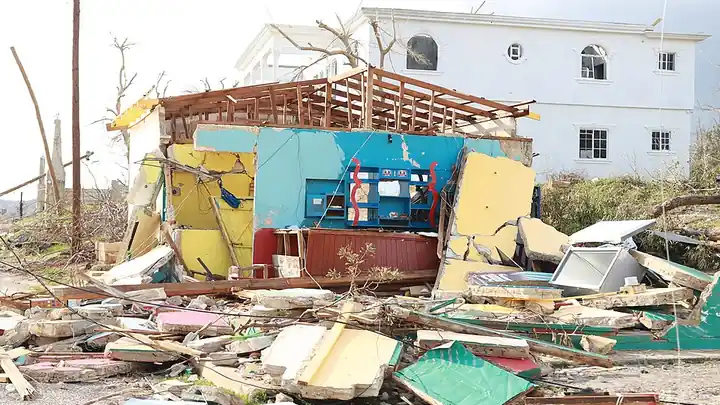
What comes first when the yard has flooded?
Who handles this: You, on the ground
Your people come before the plumbing. In this order:
- Stay out of floodwater around pits, covers and tanks, since a cover may have shifted and the ground may have softened
- Stay clear of wires: ODPEM says "Do not touch loose or dangling electrical wires."
- Use no appliance or fixture until the power has been checked
- Smell gas? Follow gas smell and LPG and keep out of the house
- Drink only treated water, using the doses on drinking water after a storm
Nobody opens a pit to see how it looks.
Source: ODPEM safety tips on JIS; order of steps is general practice.
Next: Should the septic tank be pumped right away?Should the septic tank be pumped right away?
Who handles this: Qualified contractor
Usually not while the ground is still saturated. US EPA guidance says "Do not pump the tank during flooded or saturated drainfield conditions", because an emptied tank may "float out of the ground". That is US guidance, and we found no Jamaican procedure.
ODPEM's booklet says "Service damaged septic tanks, cesspools, pits and leaching systems as soon as possible." The two fit together: get a qualified contractor to assess damage soon, then let them decide when pumping is safe.
Pits and tanks hold deadly gas, so nobody enters one or leans in. If a person drops at a pit, nobody follows them in. Call 110.
Source: EPA septic flood leaflet, 2005; ODPEM's 2019 booklet
Next: Can we still use the toilet?Can we still use the toilet?
Who handles this: You

Use it as little as you can, and stop altogether if sewage comes back up. A flooded pit or tank has nowhere to send more water, so each flush and each load of washing pushes against a system that is already full.
- No laundry until drains run freely
- Short washes only
- Flush only when needed
- If the lowest drain or toilet backs up, stop using all water and keep people out of that room
For the longer term, see signs of a full cesspool.
Source: General plumbing practice, not a Jamaican document.
Next: Floodwater reached the water tank. Is it still usable?Floodwater reached the water tank. Is it still usable?
Who handles this: Health department
Use it only for flushing, and ask your parish health department what comes next. No Jamaican procedure for a flooded tank turned up in our search. The nearest official line is the Ministry's on floodwater: "Use it only for flushing toilets."
Do not drink it, cook with it or bath children in it, even after it settles.
When the health department advises on cleaning, the Ministry's general wording and our cautions are on cleaning a water tank. Nobody climbs inside a tank. If the flood moved the tank or its stand, leave repairs to someone trained, and read roof or ground first.
Source: JIS Ministry water advice, February 2026
Next: Sewage came into the house. How do you clean up?Sewage came into the house. How do you clean up?
Who handles this: You
Wait until the power has been checked and there is no gas smell before going in. Keep children out, and wear gloves and boots.
US guidance from EPA on cleaning up after a backup is "a half cup of chlorine bleach to each gallon of water". We found no Jamaican figure, and that gallon is a US one. Do not mix bleach with other cleaners.
If drains stay slow or smell, silt may have fouled a trap, so have a plumber look.
Source: EPA septic flood leaflet, 2005; protection and trap points are general practice.
Next: When can the power, pump and gas come back on?A model to compare
Drain traps. If a plumber finds a trap fouled or cracked after a flood, this range is useful for comparing replacement types and sizes.
Plumbing Supply and More has the same owners as this site. It is a US business and shipping to Jamaica is not promised, so treat this as a model to compare, then ask your local supplier for the same type.
When can the power, pump and gas come back on?
Who handles this: Electrician
Only after someone qualified says so. Power stays off, by JIS's flood tips, till "an electrical personnel has confirmed that it is OK". ODPEM's flood page tells people coming back to leave appliances and fixtures alone.
Do not walk through standing water to get to a panel. A pump, pressure switch or electric shower head that got wet stays off until an electrician has checked it, and the breaker goes off before anyone touches it. Do not test a pump by running it.
Gas works the same way. ODPEM says that once gas has been turned off, "only a qualified professional can turn it back on".
Source: JIS flood tips; ODPEM on floods; ODPEM gas line, booklet
Next: My well or spring went under water. Now what?My well or spring went under water. Now what?
Who handles this: Health department
Do not drink from it until it has been tested. US EPA says so plainly, and although that is US guidance, the reasoning fits Jamaican ground. The Water Resources Authority describes limestone aquifers as "highly karstified", so what enters a sinkhole up the hill can reach a spring quickly.
We could find no ODPEM wording or other Jamaican steps for wells after floods. The parish health department is the office to ask about testing. Use treated or trusted water in the meantime. Licensing and test notes are on wells and springs.
Source: EPA septic flood leaflet, 2005; WRA plan 2022, page 38
Next: What about all the standing water in the yard?What about all the standing water in the yard?
Who handles this: You, on the ground
Get rid of what you can in the first days, because mosquitoes breed in it. ODPEM's flood page advises "punching holes in all containers in which water can settle". We read that as rubbish: tins and broken buckets, not the drums you are storing water in. Those get covered tightly.
Look for water in old tyres and sagging tarpaulins. A gutter job on a roof waits for dry, calm weather and a paid, trained person.
A sunken patch or standing sewage near a pit is different: keep off it and tell the contractor. Our page on mosquitoes in tanks has the cover and mesh details.
Source: ODPEM's flood advice; examples are general practice.