How do you know a cesspool is full?
8 cards · about 148 KB · Updated · From Tanks and Taps Jamaica
The answer
Cesspool full signs are slow drains all over the house, a sewage smell and wet ground near the pit; cut water use, keep everyone back, and get a qualified contractor.
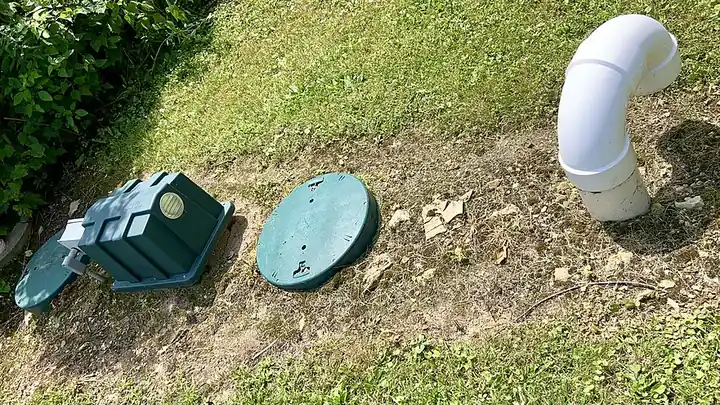
Is it the pit, or just a blocked pipe?
Who handles this: You, on the ground
Count the fixtures. One slow sink usually means a blockage in that branch. Everything slow together points to the main drain or the pit.
Signs that lean towards the pit:
- Toilets, showers and sinks all draining slowly
- Gurgling from a drain when something else empties
- Sewage coming up at the lowest drain in the house
- A smell in the yard, stronger after rain
- Wet or unusually green ground around the pit
We found no Jamaican list of these signs, so this is general practice. A plumber can check the house drain first, which may save a truck visit. Hiring a plumber lists good questions.
Source: General plumbing practice, not a Jamaican document.
Next: What should happen in the first hour?A model to compare
Cleanouts and plugs. A cleanout fitted by a plumber on the house drain, never on the pit, gives a way to clear a blockage without going near the pit.
Plumbing Supply and More has the same owners as this site. It is a US business and shipping to Jamaica is not promised, so treat this as a model to compare, then ask your local supplier for the same type.
What should happen in the first hour?
Who handles this: You, on the ground
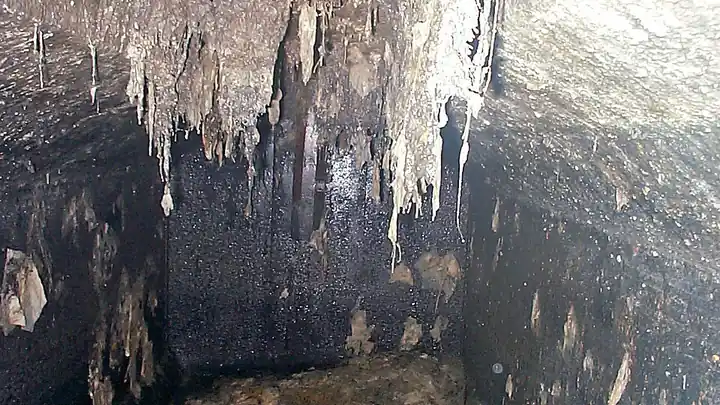
Take the load off and keep people clear.
- Stop laundry and long showers, and flush only when needed
- Keep children and pets away from the pit area
- Keep vehicles off the ground around it
- Check from a distance that the cover looks in place; if it has moved or cracked, block the area off and get a contractor, without standing at the opening
- Do not lift a cover to look
If sewage is on the ground, stay out of it. Wash thoroughly after any contact. Treat a sunken patch near the pit as a collapse risk and keep off it. If the overflow began with a storm, pumping may have to wait: see flooded septic after a storm.
Source: General plumbing practice, not a Jamaican document.
Next: How dangerous is the gas in a pit?How dangerous is the gas in a pit?
Who handles this: Qualified contractor
It can kill. Never enter a pit, and never lean into one. US EPA guidance says "Only trained specialists should clean or repair septic tanks because tanks may contain dangerous gases."
Hydrogen sulfide has a "strong odor of rotten eggs", and NIOSH lists 100 ppm as immediately dangerous to life or health. Do not rely on your nose: this gas can dull the sense of smell.
The US CDC recorded that in August 1992 "four farm workers in Minnesota died in two separate incidents after entering manure waste pits". Those were farm pits, not house pits, but the lesson about entering carries over.
Source: US EPA, what to do after a flood, 2005; NIOSH, hydrogen sulfide; CDC, MMWR on 1992 deaths
Next: What if someone collapses in or beside a pit?What if someone collapses in or beside a pit?
Who handles this: You, on the ground
Do not go in, however close the person is. Would-be rescuers can be overcome by the same gas, and then there are two people to save.
Call 110, the Fire Brigade's emergency number for fire and ambulance. Say plainly that a person is down in a sewage pit and that gas may be involved. Have the community, parish and nearest town ready, plus a callback number, as the Brigade asks.
Keep everyone else back, and send someone to the road to guide the crew in. Do not send anybody to the opening to look, shout down or lower a rope.
Source: Fire Brigade website; JIS on Brigade call details, Aug 2021
Next: Who empties it, and what do you ask them?Who empties it, and what do you ask them?
Who handles this: Qualified contractor
Use a qualified contractor with a proper truck. We found no licence scheme or register for people who empty pits, so the questions matter:
- Where will the load go? Regulation 28 requires "a treatment plant approved by the Authority".
- Will your crew stay out of the pit?
- What is the total price in J$, in writing?
NWC, the National Water Commission, lists a "Sewerage Dumping Fee" of "$4.30 per gal", shown as J$8,600 for a 2,000-gal truck. That is NWC's fee list, 2022-23 column; check before paying. It is not the full hauler's charge, and the list does not say which sites take loads. We have no reliable figure for what a truck visit costs.
Source: NRC sludge regulations 2013, reg 28; NWC miscellaneous fees, 2022-23
Next: How often should a cesspool be emptied?How often should a cesspool be emptied?
Who handles this: Qualified contractor
There is no figure we can give you. The well-known "every three to five years" comes from US EPA septic guidance and describes a septic tank with a drainfield, not a cesspool taking raw sewage. Household size, pit size and soil all change the answer.
Note the date each time it is emptied. A pit that fills faster and faster may have clogged sides, so emptying alone will not cure it.
Rain can also fill a pit. EPA says to keep roof drains off the drainfield, and the same thinking applies here: send roof water elsewhere or into a rainwater system. Not sure what you have? See cesspool, septic or soakaway.
Source: EPA, caring for a septic system, Aug 2026
Next: What should never go down the toilet?What should never go down the toilet?
Who handles this: You
Less solid waste means fewer truck visits. US EPA's rule for septic systems is short: "Only flush human waste and toilet paper". NWC's wastewater page, writing about sewers, names cigarettes, condoms and tampons as things not to flush.
Add these from general practice: baby wipes, even those sold as flushable, cooking grease and strong chemicals.
Fixing a dripping toilet helps as well, since every litre that leaks goes to the pit. The test is on high NWC bill.
Source: EPA septic page, 2026; NWC sewer notes; wipes and grease are general plumbing practice.