Mandeville and the rural parishes: water when pipes fall short
9 cards · about 21 KB · Updated · From Tanks and Taps Jamaica
The answer
Mandeville water supply is lifted from wells at Peppers, St Elizabeth, and the National Water Commission estimates non-revenue water at almost 65%, so home storage matters here.
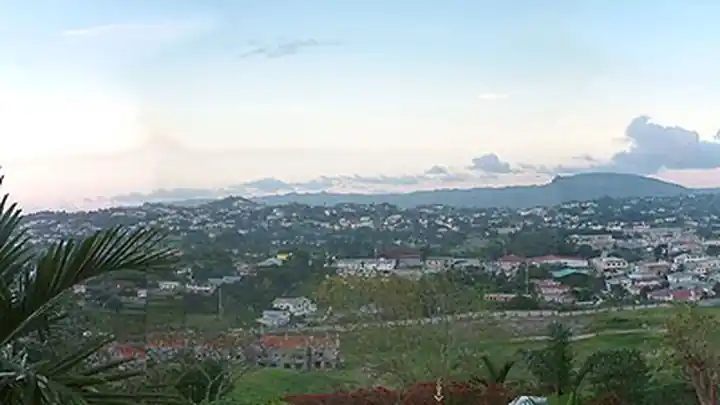
How does water get to Mandeville?
Who handles this: NWC
By pump, largely. The National Water Commission (NWC) describes Greater Mandeville as served by "lift stations drawing water from wells at Peppers, St. Elizabeth".
That means power matters as much as rain. If a lift station has no electricity or a pump fails, water can stop however full the aquifer is. That last point is our reasoning, though JIS did list prolonged power outages among the things that disrupted treatment after Melissa.
So when supply stops, a storm or an outage may be the cause rather than drought. NWC posts disruptions on its parish advisories page. We found no lift-station schedule.
Source: NWC, Water and sewerage project; JIS, 2 Nov 2025
Next: What does 65% non-revenue water mean for me?What does 65% non-revenue water mean for me?
Who handles this: NWC
It means most of what gets pumped earns NWC nothing. NWC estimates non-revenue water for Greater Mandeville at almost 65%; its Kingston programme started from 60%. NWC's page gives no date for the Mandeville figure, so treat it as a broad picture.
Non-revenue is not all leaks. It also counts water used without being billed, such as illegal connections and meters reading low. We have no split.
Your part is small but real: report leaks on roads and footpaths on NWC's form. Then check your own side using the no-use test in high bills.
- Greater Mandeville (almost 65%)almost 65%
- Kingston and St Andrew, programme start60%
Source: NWC, Water and sewerage project; NWC, Non-revenue water
Next: Is it wise to rely on rain instead?Is it wise to rely on rain instead?
Who handles this: You
Plenty of homes already do. The 2023 Rainwater Harvesting Planning Guideline says 15% of Jamaicans use rainwater as their primary supply, and recommends at least 700 gallons or 3,150 litres for a home. We found no parish breakdown.
Our catchment stack covers gutters and first flush; drinking it needs a filter plus bleach or boiling.
Money may help. The NHT's SMART Energy Loan, on an undated page, offers up to J$2.5 million and covers rainwater systems including tanks and pumps, for contributors who own and occupy the property. Check the terms and rate with NHT, since the page says only "concessional".
Source: Rainwater Harvesting Planning Guideline, Oct 2023; NHT, SMART Energy Loan, undated
Next: My area isn't on NWC. Who supplies it?My area isn't on NWC. Who supplies it?
Who handles this: Municipal corporation
That depends, and we could not find a list. NWC's own impact fee page says private entities are licensed by the Office of Utilities Regulation in specific areas and that Parish Councils are also involved in water supply. It does not say where.
We also searched for detail on the Tulloch and NIC minor systems, without success.
Start with whoever bills you, or whoever turns the standpipe on. If nobody can say, ask at your municipal corporation's office and write the answer down. For bill disputes with NWC itself, the ladder runs up to the Office of Utilities Regulation; for a private supplier we could not confirm the route.
Source: NWC, Impact Fees; NWC, FAQs
Next: Is groundwater here turning salty?Is groundwater here turning salty?
Who handles this: Water Resources Authority
Parts of the south are flagged. The Water Resources Authority's 2022 master plan names Bull Savanna and southern Manchester and St Elizabeth as vulnerable to saline intrusion, along with the Black River management unit. Its marker is chloride above 250 mg/L.
We could find no salinity figures by parish, and no reading for any particular well. Taste is a poor test, since water can be well into trouble before it tastes of salt.
If your household draws from a well in those areas, add chloride to the lab request. For what a high result means for a heater warranty, see salt corrosion.
Source: WRA, Master Plan 2022, p.62
Next: Can you use the spring or well on your land?Can you use the spring or well on your land?
Who handles this: Water Resources Authority
Quite possibly, but ask before you dig. As we read the Water Resources Act, domestic use from a source you have a right of access to can be licence-free, while sinking or altering a well appears to need the Authority's consent. Confirm that with the WRA first. The wells and springs stack has the sections and fees.
Clear water proves little in this country. Limestone is about half the island's land area, and WRA calls it "highly karstified": water runs fast through sinkholes and caves, with little time to be filtered. A spring can carry what went into a sinkhole upstream, so test it and treat it before drinking.
Source: Water Resources Act; WRA, Master Plan 2022, p.38
Next: Is supply back to normal after Melissa?Is supply back to normal after Melissa?
Who handles this: Health department
We cannot say. PAHO/WHO's report of 29 October 2025 named Manchester and St Elizabeth among six parishes most affected. We found nothing that states the current condition of the Peppers wells, the lift stations or the smaller rural systems, a year later.
What you can do is treat any doubtful water, using our drinking water stack, and ask the parish health department about your own source. A tank or catchment that took floodwater has no Jamaican procedure we could find, so that office is your first call; see flooded tanks.
Source: PAHO/WHO situation report 3, October 2025
Next: Who approves a house or a pit out here?Who approves a house or a pit out here?
Who handles this: Municipal corporation
In Manchester, the Planning Department processes building and subdivision applications. It offers a form, a fee calculator and hillside guidelines, though the pages we read give no plumbing or drainage requirements. We did not read St Elizabeth's or other rural corporations' pages.
Ask about sewage early. A pit in cracked limestone can drain towards someone's well, and we found no Jamaican setback distance to quote, so the parish health department is who to ask. See septic approval and building approval.
NWC recommends but does not approve proposals outside Kingston and St Andrew.
Source: Manchester MC, Planning; Manchester MC, Building application form; NWC, Developers guide; the limestone and well point is general plumbing practice.