Cesspool, septic tank or soakaway: which do you have?
8 cards · about 49 KB · Updated · From Tanks and Taps Jamaica
The answer
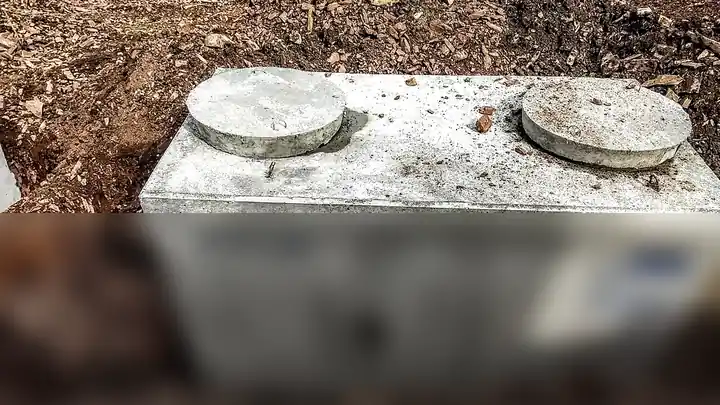
Cesspool vs septic tank comes down to treatment: a cesspool simply takes raw sewage into a pit, while a septic tank settles solids first and sends the liquid on to a soakaway or tile field.
What does each system actually do?
Who handles this: You
These four names get mixed up all the time, and in many yards two of them work together.
| System | What it does | Emptied? |
|---|---|---|
| Cesspool | A pit taking raw sewage straight from the house; liquid seeps out or it simply fills | Yes, by truck |
| Septic tank | A closed tank where solids settle and scum floats; liquid flows out to the next stage | Yes, the sludge |
| Soakaway or absorption pit | Takes liquid and lets it soak into the ground | Not as routine; a contractor assesses a clogged one |
| Tile field | Buried pipes spreading liquid through soil | No |
The septic tank does not finish the job. Its liquid still needs a soakaway or tile field after it.
Source: General plumbing practice, not a Jamaican document.
Next: How do you find out what a house has without opening anything?How do you find out what a house has without opening anything?
Who handles this: You, on the ground
Start with paper. Building applications are meant to show this: the Kingston and St Andrew Municipal Corporation's checklist asks for "sanitary drains, septic tanks, absorption pit, soak away pit, tile field" on the plans. So ask the previous owner for the house drawings, or ask your municipal corporation whether it holds them.
Then walk the yard and note where covers sit, without lifting any. If you are still unsure, a qualified contractor can tell you. Our page on who approves a septic tank covers the offices.
Source: KSAMC checklist for building applications, 2020
Next: Why must nobody climb into one, or lean over the opening?Why must nobody climb into one, or lean over the opening?
Who handles this: Qualified contractor
All of these can hold deadly gas, and a person can drop within moments of breathing it. Nobody goes in, and nobody leans in to look or to fish something out. Pit work belongs to a qualified contractor.
US guidance leaves septic cleaning and repair to trained specialists because of dangerous gases. We hold cesspools and soakaways to the same rule.
Should a person go down in or beside a pit, stay out yourself and call 110. Keep every cover secure and children away, whichever type you have. The warning signs of a full pit page explains the gas in more detail.
Source: US EPA flood sheet on septic, 2005; JFB home page, emergency line; the gas warning for other pit types is general practice
Next: Where does the waste go when one is emptied?Where does the waste go when one is emptied?
Who handles this: Qualified contractor
It should not end up in a gully or on open land. Jamaica's wastewater regulations treat septage as material removed from a septic tank, cesspool, portable toilet or similar, and regulation 28 sends it to a treatment plant approved by the Authority, meaning the Natural Resources Conservation Authority.
So one sensible question for anyone quoting to empty your pit is where the load will go. We could not find a licence scheme for haulers or a public list of approved disposal sites, so you may have to press for a plain answer.
A tile field is not something a truck empties, and a soakaway that has stopped draining usually needs more than a suck-out. Ask the contractor what the problem really is before paying for a truck.
Source: Wastewater and Sludge Regulations 2013, Gazette; soakaway point is general plumbing practice.
Next: How big should a septic tank be, and how far from a well or boundary?How big should a septic tank be, and how far from a well or boundary?
Who handles this: Health department
We found no Jamaican size rule and no setback distance, so we will not print one. Figures from other countries assume other soils and should not be borrowed.
The document most likely to hold such rules, a volume of NEPA's Development and Investment Manual on wastewater, could not be opened when we checked. Ask your parish health department and municipal corporation before anything is dug.
Rock matters here. The Water Resources Authority's 2022 master plan puts limestone aquifers at about 50% of land area and calls the limestone "highly karstified", with water moving fast through conduits, sinkholes and caves. Waste can travel in rock like that, which is one more reason to get local advice if you have a well or spring.
Source: WRA water master plan 2022, p.38
Next: How often does each one need attention?How often does each one need attention?
Who handles this: You
The only published interval we found is American and fits only one of the four. US EPA guidance says a septic system should be "inspected at least every three years" and is "typically pumped every three to five years". That assumes a sealed tank followed by a drainfield. It does not fit a cesspool, which fills according to the household, the pit and the soil around it.
The practical habit is to write down each emptying date. If the gaps shrink, the ground around the pit may be clogging or the household may have grown. Tell the contractor, and read the signs of a full cesspool before the sewage shows up at a drain.
Source: US EPA septic care page, updated 17 Aug 2026
Next: Does a nearby public sewer change anything?Does a nearby public sewer change anything?
Who handles this: NWC
It can. The National Water Commission (NWC) has wastewater systems in places such as Montego Bay, Negril, Ocho Rios, Soapberry and parts of Kingston and St Andrew. Its wastewater page says it can require owners inside a service area to connect. Being near a line, within 100 yards or 91.4 metres, can also bring a sewerage charge with no connection at all.
So before spending on a new tank, ask NWC whether a sewer serves your road. The details, and what happens to an old pit afterwards, are on who approves a septic tank. If you are adding a bathroom, also read about building approval, because more water going to the same pit is a question for your plans.